

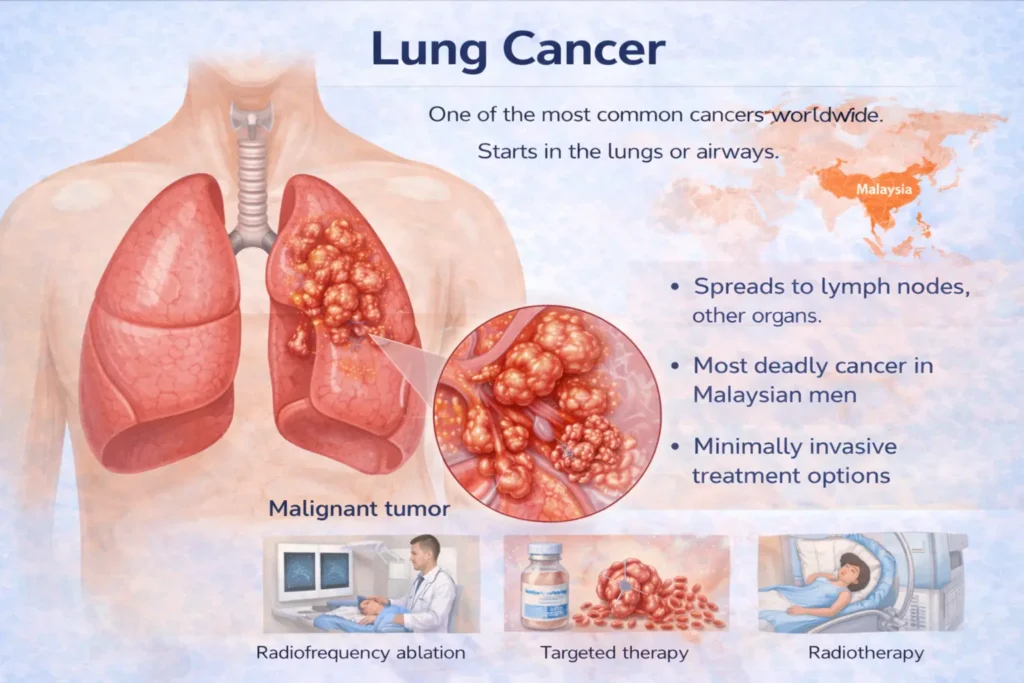
Lung cancer occurs when abnormal cells in the lungs grow uncontrollably and form a tumor. It is one of the most common cancers worldwide, but advances in diagnosis and treatment now provide more options and better outcomes for many patients.
What Is Lung Cancer?
The lungs help your body absorb oxygen and remove carbon dioxide. Lung cancer usually begins in the cells lining the airways of the lungs. Over time, cancer cells may grow larger or spread to nearby organs and other parts of the body.
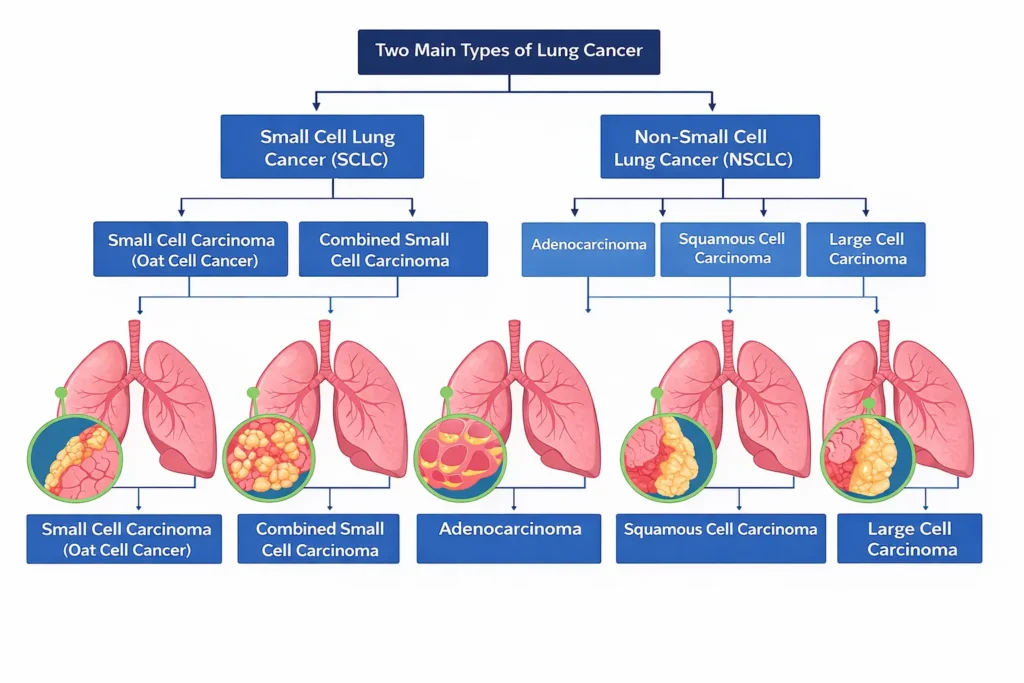
There are two main types of lung cancer:
Non-Small Cell Lung Cancer (NSCLC)
This is the most common type, accounting for around 85% of cases. It generally grows more slowly than small cell lung cancer. Common subtypes include:
- Adenocarcinoma
- Squamous cell carcinoma
- Large cell carcinoma
Small Cell Lung Cancer (SCLC)
This type is less common but tends to grow and spread more quickly. It is often strongly linked to smoking.
Common Symptoms of Lung Cancer
Early-stage lung cancer may not cause noticeable symptoms. As the disease progresses, patients may experience:
- Persistent cough
- Coughing up blood
- Shortness of breath
- Chest pain
- Wheezing
- Fatigue
- Unexplained weight loss
- Recurrent lung infections such as pneumonia or bronchitis
These symptoms can also be caused by non-cancer conditions, so proper medical evaluation is important.
Risk Factors
Several factors can increase the risk of developing lung cancer, including:
- Smoking or long-term exposure to cigarette smoke
- Air pollution
- Exposure to asbestos or harmful chemicals
- Family history of cancer
- Long-term lung disease
- Passive smoking
Although smoking is the leading risk factor, lung cancer can also occur in non-smokers.
How Lung Cancer Is Diagnosed
Doctors may use several methods to diagnose lung cancer and determine its stage, including:
- CT scan
- PET/CT scan
- Bronchoscopy
- Biopsy
- Blood tests
- Molecular testing and genetic analysis
Modern diagnostic methods can help doctors identify specific gene mutations, allowing treatment plans to be more personalized and targeted.
Stages of Lung Cancer
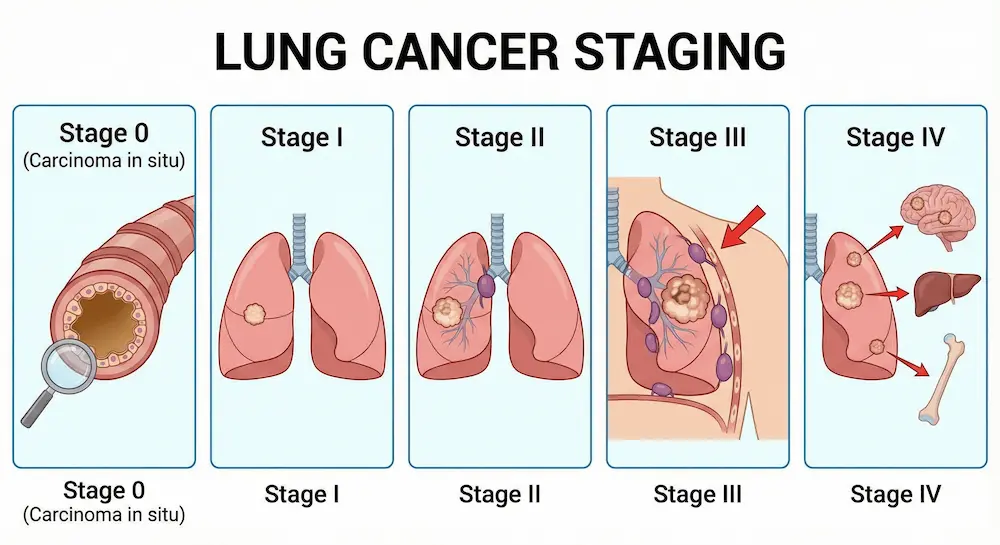
Lung cancer is usually classified from Stage I to Stage IV:
- Stage I: Cancer is limited to the lung.
- Stage II: Cancer has spread to nearby lymph nodes.
- Stage III: Cancer has spread further within the chest area.
- Stage IV: Cancer has spread to distant organs such as the brain, liver, or bones.
The stage of cancer helps doctors determine the most suitable treatment approach.
Treatment Options for Lung Cancer
Treatment depends on several factors, including the type of lung cancer, stage, tumor size, overall health, and whether the cancer has spread.
Surgery
Surgery may be recommended for patients with early-stage non-small cell lung cancer when the tumor can be safely removed.
Chemotherapy
Chemotherapy uses anti-cancer drugs to destroy cancer cells or slow their growth. It may be used alone or combined with other treatments.
Radiotherapy
Radiotherapy uses high-energy radiation to target and destroy cancer cells.
Targeted Therapy
Targeted therapy focuses on specific genetic mutations or proteins found in cancer cells, helping improve treatment precision.
Immunotherapy
Immunotherapy helps the immune system recognize and attack cancer cells more effectively.
Minimally Invasive Cancer Treatments
Through We Care Asia China, patients can access minimally invasive cancer treatments designed to reduce damage to healthy tissue and support faster recovery. These treatments may include:
- Cryosurgery (freezing cancer cells)
- Interventional therapy
- Microwave ablation
- NanoKnife therapy
- Radioactive seed implantation
These treatment options may be suitable for selected patients, especially those who are not ideal candidates for conventional surgery.
Personalized Multidisciplinary Care
We Care Asia China supports a multidisciplinary team (MDT) approach, where specialists from different medical fields work together to create personalized treatment plans for each patient. The team may include:
- Medical oncologists
- Thoracic surgeons
- Radiologists
- Pulmonologists
- Pathologists
- Radiation oncologists
This collaborative approach helps improve treatment planning and overall patient care.
Can Lung Cancer Be Treated Successfully?
Treatment outcomes vary depending on the cancer stage, type, and overall health of the patient. Early detection significantly improves the chances of successful treatment.
Today, many patients are able to manage lung cancer more effectively thanks to advances in minimally invasive treatments, targeted therapy, immunotherapy, and personalized medical care.
When Should You See a Doctor?
You should seek medical advice if you experience:
- A cough lasting more than a few weeks
- Blood in sputum
- Persistent chest pain
- Difficulty breathing
- Sudden weight loss
- Chronic fatigue
Early consultation can help improve diagnosis and treatment outcomes.
Conclusion
Lung cancer is a serious disease, but medical technology and treatment strategies continue to improve rapidly. Understanding the symptoms, risk factors, diagnosis process, and available treatment options can help patients and families make more informed decisions with confidence.
Through We Care Asia China, patients can explore comprehensive cancer care solutions, advanced minimally invasive treatment technologies, and personalized medical support tailored to their individual condition.