

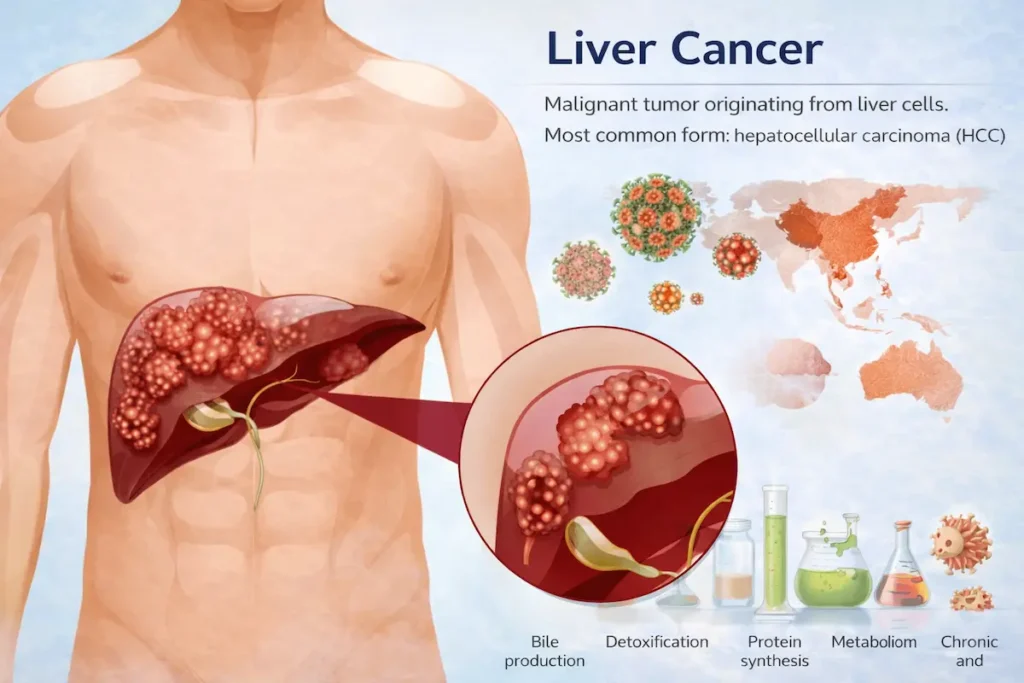
Understanding Liver Cancer
Liver cancer occurs when abnormal cells in the liver grow uncontrollably and form a tumor. The liver is one of the body’s most important organs, responsible for filtering toxins, processing nutrients, producing bile for digestion, and supporting many essential body functions. When cancer develops in the liver, these functions can be affected.
Liver cancer can either begin in the liver itself (primary liver cancer) or spread to the liver from another part of the body (secondary or metastatic liver cancer). The most common type of primary liver cancer is hepatocellular carcinoma (HCC).
At We Care Asia China, we focus on providing personalized cancer care through advanced diagnostic methods, minimally invasive treatments, and multidisciplinary medical collaboration.
Common Symptoms of Liver Cancer
In the early stages, liver cancer may not cause obvious symptoms. As the disease progresses, patients may experience:
- Pain or discomfort in the upper right abdomen
- Unexplained weight loss
- Loss of appetite
- Persistent fatigue
- Swollen abdomen or bloating
- Nausea or vomiting
- Yellowing of the skin or eyes (jaundice)
- Dark urine
- Fever without clear cause
These symptoms may also be related to other liver conditions, so proper medical evaluation is important.
Risk Factors for Liver Cancer
Several conditions and lifestyle factors can increase the risk of liver cancer, including:
- Chronic hepatitis B or hepatitis C infection
- Liver cirrhosis
- Excessive alcohol consumption
- Fatty liver disease
- Diabetes and obesity
- Long-term exposure to certain toxins
- Family history of liver disease
People with chronic liver disease are encouraged to undergo regular screening for early detection.
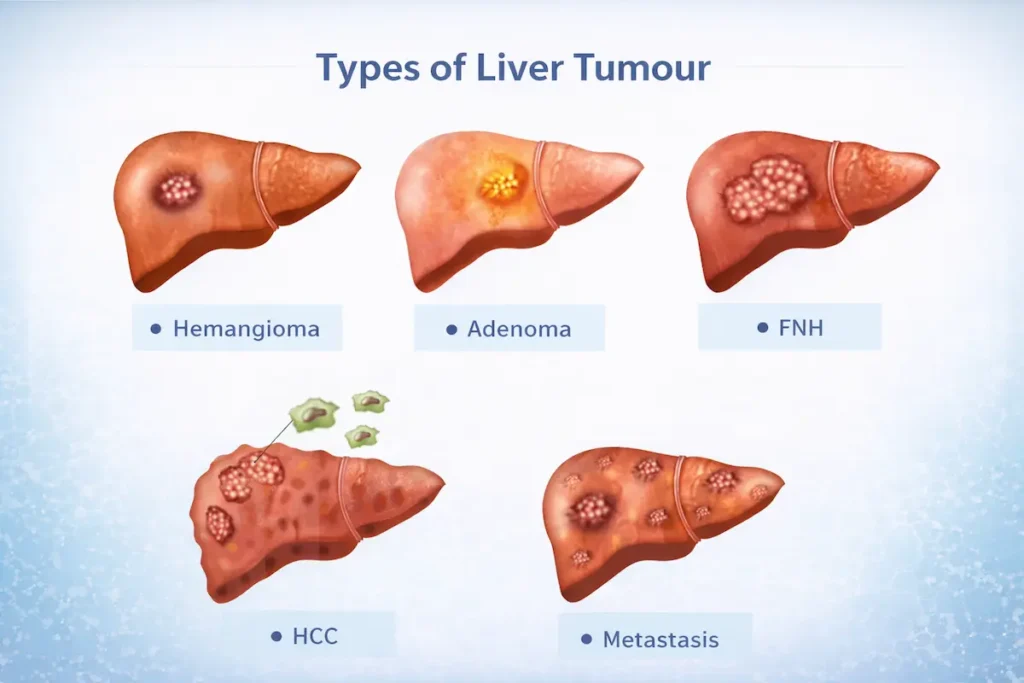
Types of Liver Cancer
Hepatocellular Carcinoma (HCC)
The most common type of liver cancer, developing from the main liver cells called hepatocytes.
Cholangiocarcinoma
Cancer that develops in the bile ducts inside or outside the liver.
Metastatic Liver Cancer
Cancer that starts in another organ and spreads to the liver.
How Liver Cancer Is Diagnosed
Doctors may use several tests to confirm liver cancer and determine its stage, including:
- Physical examination and medical history review
- Blood tests, including liver function tests and AFP tumor markers
- Ultrasound examination
- CT scan or MRI
- PET-CT scan
- Liver biopsy in selected cases
Accurate diagnosis helps doctors create the most suitable treatment plan for each patient.
Liver Cancer Stages
Liver cancer is generally divided into stages based on tumor size, number of tumors, lymph node involvement, and whether the cancer has spread to other organs.
Early-stage liver cancer is usually easier to treat and may offer better treatment outcomes. Advanced stages may require a combination of therapies to control disease progression and improve quality of life.
Liver Cancer Treatment Options
Treatment depends on the type, stage, liver function, and overall health condition of the patient. At We Care Asia China, treatment plans are tailored individually through multidisciplinary team discussions.
Minimally Invasive Therapy
Modern minimally invasive treatments aim to destroy cancer cells while reducing damage to healthy tissue. These procedures often involve smaller incisions, faster recovery, and reduced side effects.
Interventional Therapy
Specialized procedures deliver treatment directly to the tumor through blood vessels, helping block blood supply to cancer cells or administer targeted medication.
Ablation Therapy
Techniques such as microwave ablation or cryotherapy may be used to destroy tumors using heat or extreme cold.
Chemotherapy
Drug therapy may help control cancer growth and relieve symptoms.
Targeted Therapy and Immunotherapy
Some patients may benefit from advanced therapies designed to specifically target cancer cells or strengthen the body’s immune response.
Surgery
In selected cases, surgical removal of the tumor or liver transplantation may be recommended.
Why Early Detection Matters
Liver cancer often develops silently, making early screening especially important for high-risk individuals. Detecting cancer at an earlier stage can increase treatment options and improve long-term outcomes.
Personalized Care at We Care Asia China
At We Care Asia China, we understand that every patient’s condition is unique. Our goal is to provide comprehensive support throughout the treatment journey, including:
- Personalized treatment planning
- Multidisciplinary medical consultation
- Advanced minimally invasive therapies
- International patient assistance
- Language support and care coordination
- Ongoing monitoring and follow-up care
We are committed to helping patients and families better understand liver cancer and explore suitable treatment options with confidence.