

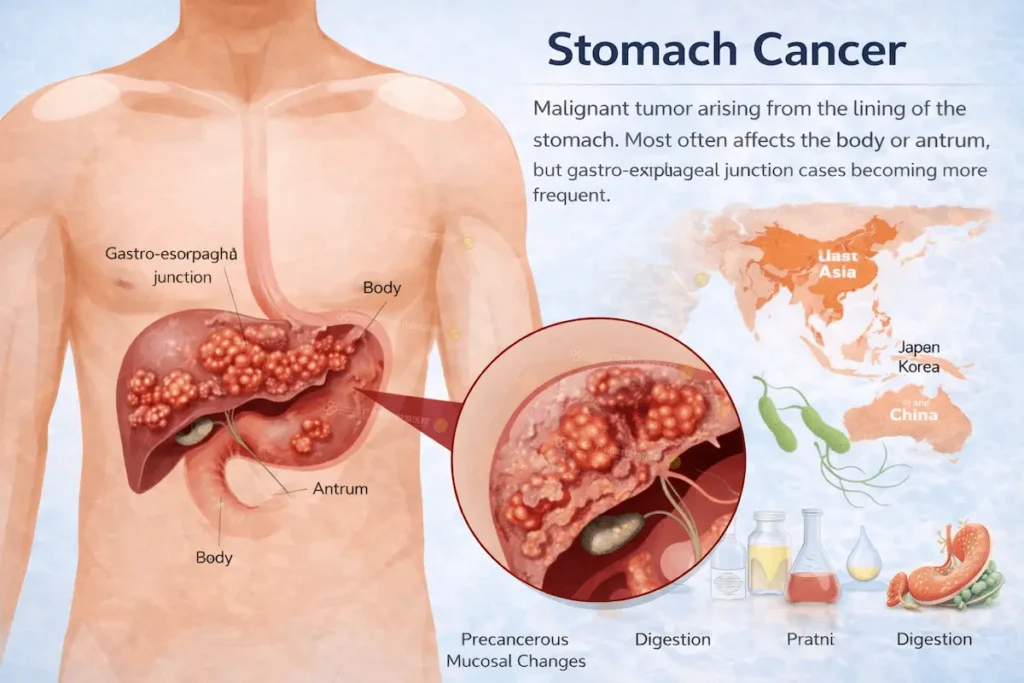
Stomach cancer, also known as gastric cancer, develops when abnormal cells grow uncontrollably in the lining of the stomach. Over time, these cells can form a tumor and may spread to nearby organs or other parts of the body if not treated early.
Most stomach cancers begin in the inner lining of the stomach and gradually grow deeper into the stomach wall. Early detection plays an important role in improving treatment outcomes.
How Common Is Stomach Cancer?
Stomach cancer is one of the more common digestive system cancers worldwide. According to global cancer statistics, it remains a major health concern, especially in Asia. In Malaysia, stomach cancer is among the top cancers diagnosed each year.
Although it can affect adults of any age, it is more commonly diagnosed in people over 55 years old and occurs more frequently in men than women.
Common Symptoms of Stomach Cancer
Early-stage stomach cancer may not cause obvious symptoms. As the disease progresses, patients may experience:
- Persistent indigestion or heartburn
- Feeling bloated after eating small amounts
- Loss of appetite
- Unexplained weight loss
- Nausea or vomiting
- Stomach discomfort or pain
- Difficulty swallowing
- Vomiting blood or blood in the stool
- Fatigue or weakness
Because these symptoms can resemble common digestive problems, many patients are diagnosed at a later stage.
Risk Factors
Several factors may increase the risk of developing stomach cancer, including:
- Smoking
- Obesity
- Chronic stomach infections such as Helicobacter pylori (H. pylori)
- Family history of stomach cancer
- Poor dietary habits
- Long-term stomach inflammation
- Genetic mutations or inherited syndromes
- Older age
People with a family history of stomach cancer may have a higher risk and should consider regular medical check-ups.
Types of Stomach Cancer
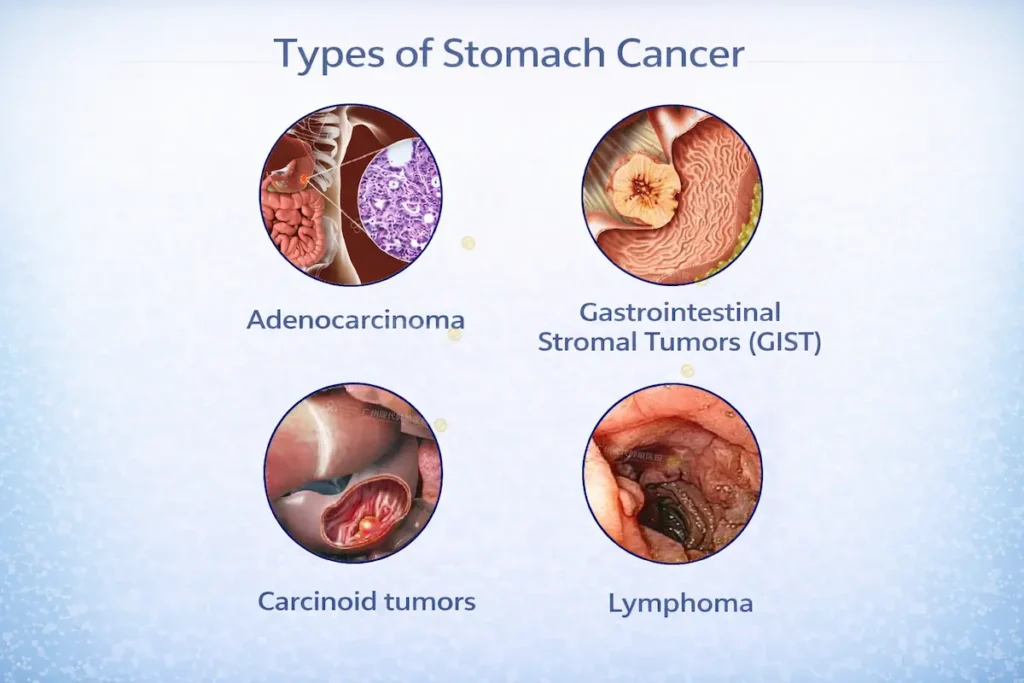
There are several types of stomach cancer, including:
- Adenocarcinoma. The most common type, accounting for the majority of stomach cancer cases. It starts in the glandular cells of the stomach lining.
- Gastrointestinal Stromal Tumor (GIST). A rare type that develops in specialized cells within the stomach wall.
- Lymphoma. Cancer that begins in the immune system cells located in the stomach.
- Neuroendocrine or Carcinoid Tumors. Tumors that arise from hormone-producing cells in the stomach.
Stages of Stomach Cancer
Doctors classify stomach cancer into stages to determine how far the disease has spread.
- Stage 0–I: Cancer is limited to the inner layers of the stomach.
- Stage II–III: Cancer has spread deeper into the stomach wall or nearby lymph nodes.
- Stage IV: Cancer has spread to distant organs such as the liver, lungs, or bones.
Understanding the stage helps doctors create a personalized treatment plan.
How Is Stomach Cancer Diagnosed
Doctors may recommend several tests to confirm stomach cancer and determine its stage, including:
- Endoscopy
- Biopsy
- CT scan
- MRI scan
- PET scan
- Blood tests
- Ultrasound
- X-ray examinations
A biopsy is usually necessary to confirm whether cancer cells are present.
Treatment Options for Stomach Cancer
Treatment depends on the stage of the cancer, the patient’s overall health, and treatment goals. Common treatment methods include:
- Surgery
- Chemotherapy
- Radiotherapy
- Targeted therapy
- Immunotherapy
- Minimally invasive treatments
At We Care Asia China, we help connect patients with advanced cancer care options and personalized treatment planning. Many modern cancer centers now combine minimally invasive therapies with supportive care approaches to help reduce side effects and improve recovery.
Minimally Invasive Cancer Treatment
Minimally invasive treatments are increasingly used in cancer care because they aim to target cancer cells while reducing damage to healthy tissues.
Some advanced minimally invasive technologies include:
- Interventional therapy
- Microwave ablation
- Cryotherapy
- Nanoknife therapy
- Particle implantation therapy
- Targeted therapies
Potential benefits may include:
- Smaller wounds and less pain
- Faster recovery time
- Reduced complications
- Shorter hospital stays
- Better quality of life during treatment
When Should You See a Doctor?
You should consult a doctor if you experience persistent digestive symptoms, unexplained weight loss, ongoing stomach pain, vomiting blood, or difficulty eating and swallowing.
Early diagnosis can significantly improve treatment options and outcomes.
Personalized Support from We Care Asia China
At We Care Asia China, we understand that every patient’s condition is unique. We assist patients in exploring personalized cancer treatment options, connecting with experienced medical teams, and receiving support throughout their treatment journey.
Our goal is to help patients and families better understand their condition and access advanced cancer care with confidence.