

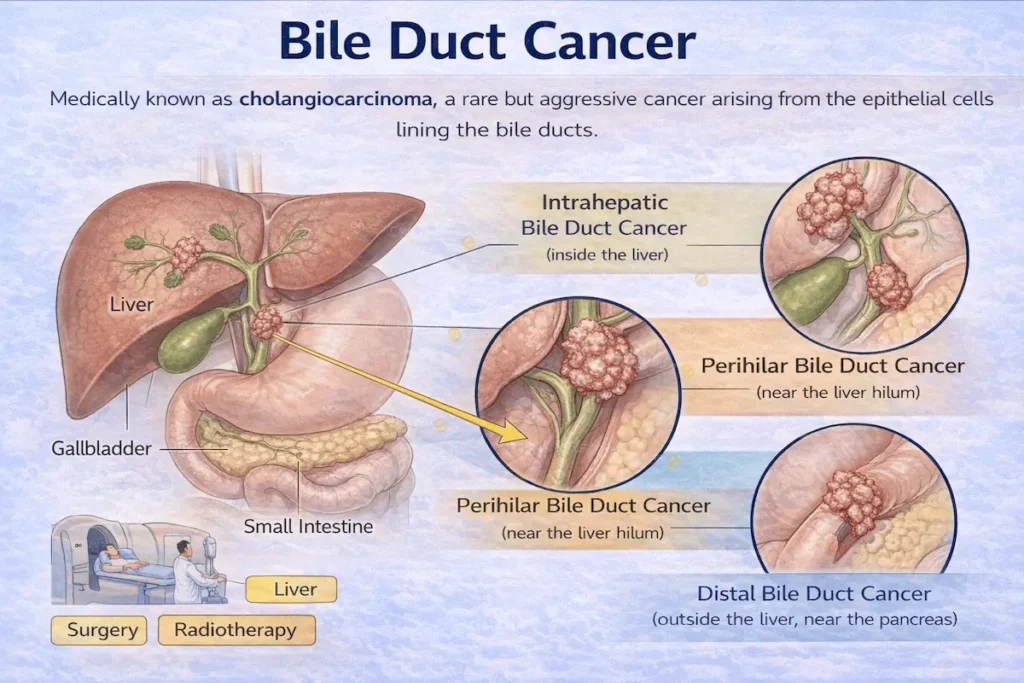
Bile duct cancer, also known as cholangiocarcinoma, is a rare type of cancer that develops in the bile ducts. These small tubes carry bile — a digestive fluid produced by the liver — to the gallbladder and small intestine to help digest fats. When cancer forms in these ducts, it can block the normal flow of bile and affect liver function.
At We Care Asia China, we understand that receiving a cancer diagnosis can feel overwhelming. Our goal is to help patients and families better understand bile duct cancer, its symptoms, causes, diagnosis, and available treatment options in a clear and supportive way.
What Is Bile Duct Cancer?
Bile duct cancer begins in the cells lining the bile ducts. Depending on where the cancer develops, it is generally classified into three types:
- Intrahepatic bile duct cancer – develops inside the liver
- Perihilar bile duct cancer – develops near the area where the bile ducts leave the liver
- Distal bile duct cancer – develops closer to the small intestine
This cancer is considered uncommon, but it can be aggressive because symptoms often appear only after the disease has progressed.
Causes and Risk Factors
The exact cause of bile duct cancer is not always known. However, several factors may increase the risk, including:
- Chronic inflammation of the bile ducts
- Liver diseases such as cirrhosis
- Bile duct cysts
- Gallstones
- Liver fluke infection
- Smoking
- Excessive alcohol consumption
- Obesity
- Older age
People over the age of 50 are more commonly affected, although younger individuals can also develop the disease.
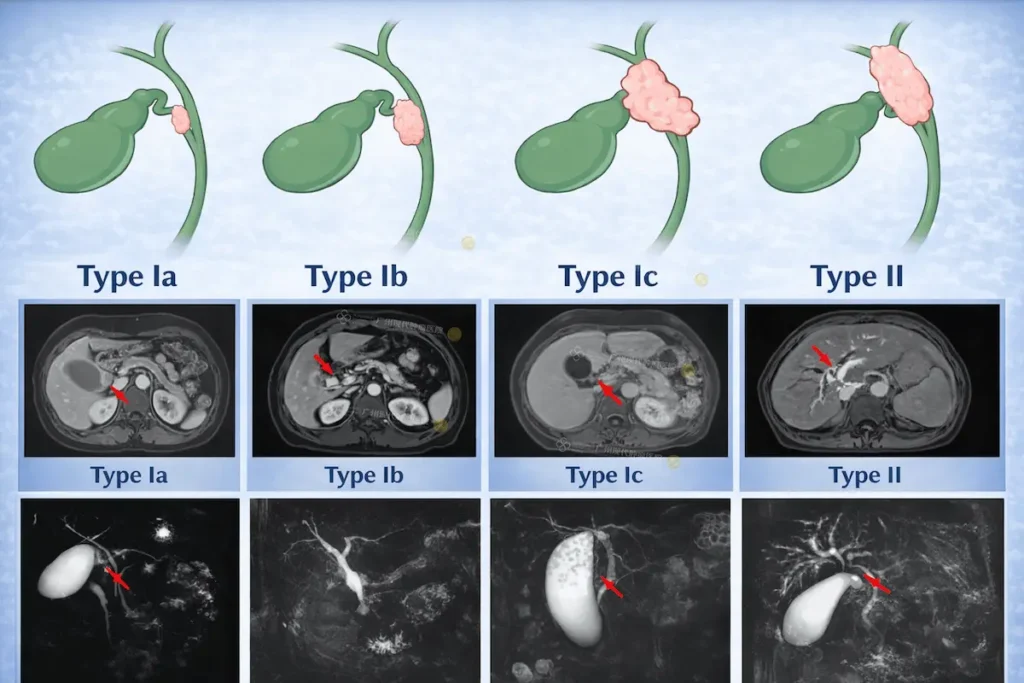
Common Symptoms of Bile Duct Cancer
In the early stages, bile duct cancer may not cause noticeable symptoms. As the tumor grows and blocks the bile ducts, symptoms can begin to appear.
Common symptoms include:
- Yellowing of the skin and eyes (jaundice)
- Dark-colored urine
- Pale or clay-colored stools
- Persistent itching
- Abdominal pain, especially on the right side
- Loss of appetite
- Unexplained weight loss
- Fatigue
- Fever or nausea
Because these symptoms may resemble other digestive or liver conditions, early medical evaluation is important.
How Bile Duct Cancer Is Diagnosed
Doctors may use several tests to confirm a diagnosis and determine the stage of the cancer, including:
- Blood tests
- Ultrasound examination
- CT scan
- MRI or MRCP
- Endoscopic procedures such as ERCP
- Biopsy to examine tissue samples
Accurate diagnosis is essential for creating the most effective treatment plan.
Stages of Bile Duct Cancer
Bile duct cancer is commonly divided into stages based on how far the disease has spread:
- Stage 0–I: Cancer is limited to the bile duct
- Stage II: Cancer spreads to nearby tissues or lymph nodes
- Stage III: Cancer involves nearby blood vessels or organs
- Stage IV: Cancer spreads to distant organs such as the lungs
Understanding the cancer stage helps doctors recommend the most appropriate treatment approach.
Treatment Options for Bile Duct Cancer
Treatment depends on the location, stage, and overall condition of the patient. At We Care Asia China, treatment plans are personalized to meet each patient’s specific needs.
Possible treatment options include:
Surgery
Surgery may be recommended if the cancer can be completely removed. In some cases, part of the liver or bile duct may also need to be removed.
Chemotherapy
Chemotherapy uses medication to destroy cancer cells or slow their growth. It may be used before or after surgery, or for advanced-stage cancer.
Radiation Therapy
Radiation therapy uses high-energy rays to target and destroy cancer cells.
Targeted Therapy and Immunotherapy
Some patients may benefit from newer treatments that specifically target cancer-related mutations or strengthen the immune system against cancer cells.
Palliative Care
For advanced cases, supportive treatments can help relieve symptoms, improve comfort, and maintain quality of life.
Importance of Early Detection
Bile duct cancer is often difficult to detect in its early stages because symptoms may be mild or absent. Early diagnosis can improve treatment outcomes and provide more treatment options. If you experience persistent jaundice, unexplained weight loss, or ongoing abdominal discomfort, it is important to seek medical attention promptly.
At We Care Asia China, we are committed to providing compassionate care, advanced medical support, and personalized treatment guidance for patients facing bile duct cancer.