

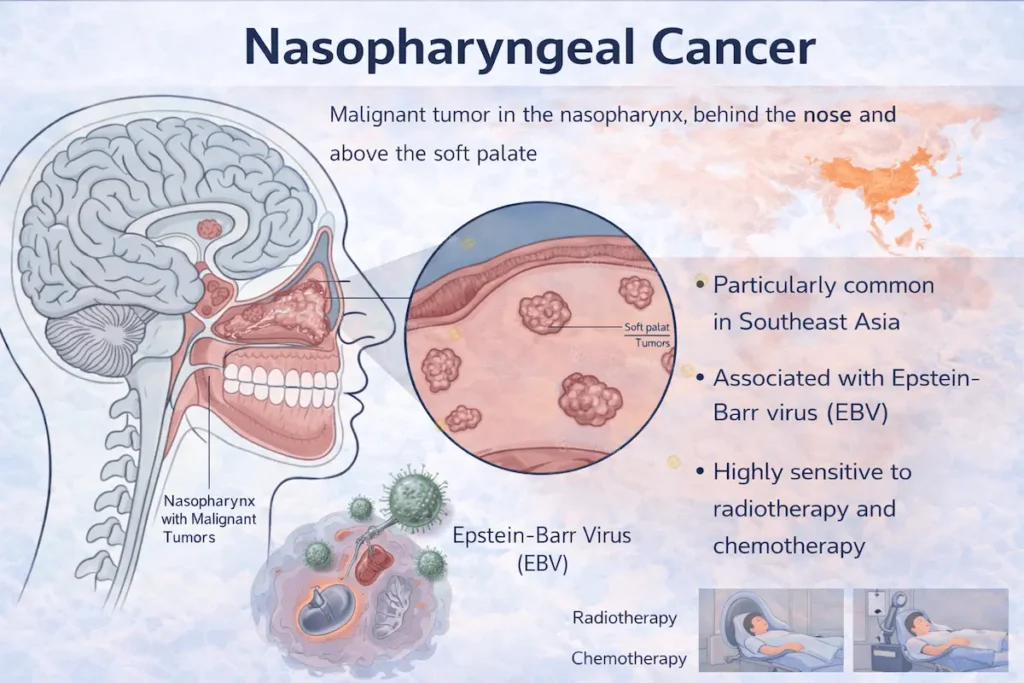
Nasopharyngeal cancer, also known as nasopharyngeal carcinoma (NPC), is a type of cancer that develops in the nasopharynx — the upper part of the throat located behind the nose. Although it is considered a rare cancer globally, it is more commonly found in Southeast Asia, including Malaysia, Indonesia, Southern China, and nearby regions.
Because the nasopharynx is hidden deep behind the nasal cavity, early-stage cancer often causes very mild symptoms or no symptoms at all. As a result, many patients are diagnosed only after the disease has progressed. Fortunately, nasopharyngeal cancer generally responds well to modern treatment methods, especially when detected early.
At We Care Asia China, we are committed to helping patients understand their condition clearly and access appropriate treatment options with professional medical support.
What Causes Nasopharyngeal Cancer?
The exact cause of nasopharyngeal cancer is not always known, but several factors are strongly linked to its development, including:
- Infection with Epstein–Barr Virus (EBV)
- Family history or genetic susceptibility
- Frequent consumption of salted or preserved foods
- Smoking and exposure to harmful chemicals
- Long-term exposure to wood dust or formaldehyde
- Living in high-risk regions such as Southeast Asia
Common Symptoms of Nasopharyngeal Cancer
In the early stages, symptoms may appear mild and are often mistaken for common ear, nose, or throat problems.
Early Symptoms
- Persistent nasal blockage
- Blood-stained mucus or nosebleeds
- Ringing in the ears
- Hearing loss, especially in one ear
- Frequent ear infections in adults
- Mild headaches
Advanced Symptoms
- Painless lump in the neck
- Facial numbness
- Double vision
- Difficulty swallowing
- Persistent headaches
- Unexplained weight loss
One of the most common warning signs is a painless swelling in the neck caused by enlarged lymph nodes.
Types of Nasopharyngeal Cancer
Nasopharyngeal cancer is generally classified into three main types:
Keratinizing Squamous Cell Carcinoma
This type is less common in Asia and tends to respond less effectively to radiation therapy.
Non-Keratinizing Differentiated Carcinoma
A more common type in Southeast Asia and often associated with EBV infection.
Non-Keratinizing Undifferentiated Carcinoma
This is the most frequently diagnosed form in endemic regions and is usually highly responsive to radiotherapy and chemotherapy.
Stages of Nasopharyngeal Cancer
Doctors determine the stage of cancer based on tumor size, lymph node involvement, and whether the cancer has spread to other organs.
- Stage I: Cancer remains confined to the nasopharynx.
- Stage II: Cancer begins spreading to nearby tissues or lymph nodes.
- Stage III: Larger tumors and wider lymph node involvement are present.
- Stage IV: Cancer spreads to distant organs such as the lungs, liver, or bones.
Even patients diagnosed at advanced stages may still achieve positive outcomes with comprehensive treatment.
How Is Nasopharyngeal Cancer Diagnosed?
Several examinations may be used to confirm the diagnosis and determine the stage of the disease, including:
- Nasal endoscopy
- MRI or CT scan
- PET-CT scan
- Biopsy of suspicious tissue
- EBV blood test for monitoring and evaluation
Early diagnosis is important because it significantly increases the chances of successful treatment.
Treatment Options for Nasopharyngeal Cancer
Treatment depends on the stage, size, and spread of the cancer, as well as the patient’s overall health condition.
Radiation Therapy
Radiotherapy is one of the primary treatments because nasopharyngeal cancer is highly sensitive to radiation.
Chemotherapy
Chemotherapy is often combined with radiotherapy to improve treatment effectiveness, especially in advanced stages.
Minimally Invasive Therapies
Some patients may benefit from minimally invasive cancer treatments that aim to target tumors more precisely while reducing damage to healthy tissue.
Targeted Therapy and Comprehensive Care
Modern cancer treatment may also include targeted therapy, supportive care, nutritional support, and personalized treatment planning.
At We Care Asia China, patients receive guidance and access to advanced cancer treatment options tailored to their individual condition and medical needs.
Can Nasopharyngeal Cancer Be Cured?
Yes. Nasopharyngeal cancer is considered one of the more treatable head and neck cancers, particularly when detected early. Advances in imaging, radiotherapy, chemotherapy, and targeted treatment have significantly improved survival rates and quality of life for many patients.
Regular follow-up care is important because recurrence can occur, especially within the first few years after treatment.