

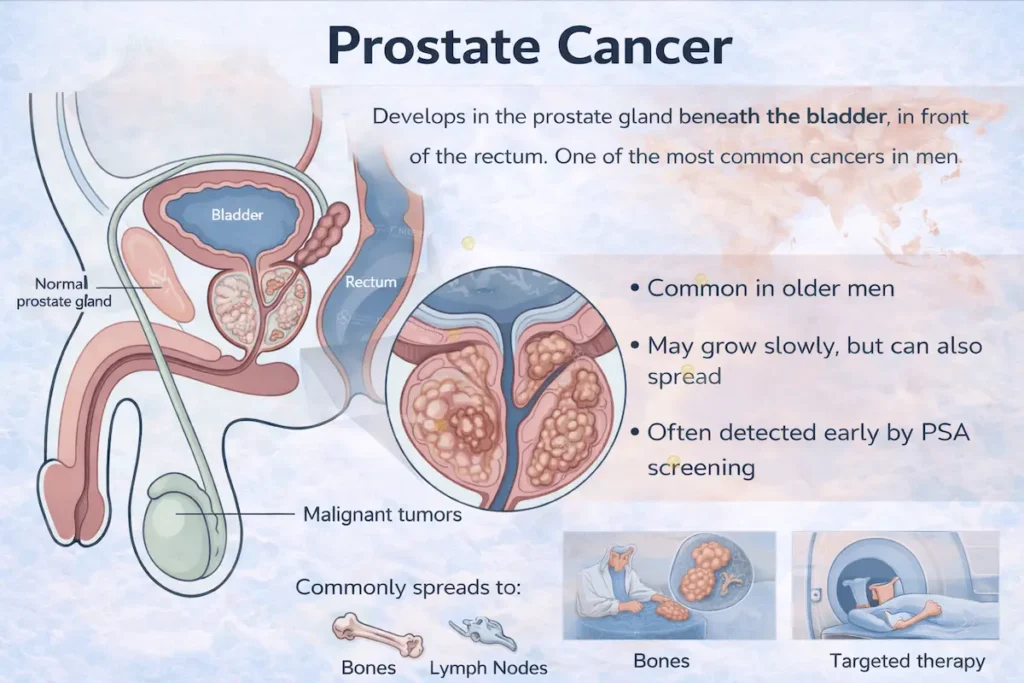
Prostate cancer is a type of cancer that develops in the prostate gland, a small gland in men located below the bladder and in front of the rectum. The prostate produces fluid that helps nourish and transport sperm.
Prostate cancer is one of the most common cancers in men. In many cases, it grows slowly and may not cause symptoms in its early stages. However, some forms can grow aggressively and spread to other parts of the body if not treated promptly.
At We Care Asia China, we believe that early detection, accurate diagnosis, and personalized treatment planning are essential for improving treatment outcomes and quality of life.
Common Symptoms of Prostate Cancer
In the early stages, prostate cancer may not cause noticeable symptoms. As the disease progresses, patients may experience:
- Frequent urination, especially at night
- Difficulty starting or stopping urination
- Weak or interrupted urine flow
- Pain or burning sensation during urination
- Blood in urine or semen
- Pain in the lower back, hips, or pelvis
- Erectile dysfunction
- Unexplained weight loss or fatigue in advanced stages
These symptoms may also be caused by non-cancerous prostate conditions. A medical evaluation is important for proper diagnosis.
Causes and Risk Factors
The exact cause of prostate cancer is not fully understood, but several factors may increase the risk:
Age
The risk increases significantly after the age of 50.
Family History
Men with a family history of prostate cancer may have a higher risk.
Hormonal Factors
Changes in male hormone levels, especially testosterone, may influence cancer growth.
Lifestyle Factors
Smoking, obesity, unhealthy diet, and lack of physical activity may contribute to increased risk.
Ethnicity
Certain ethnic groups may have a higher incidence of prostate cancer.
Types of Prostate Cancer
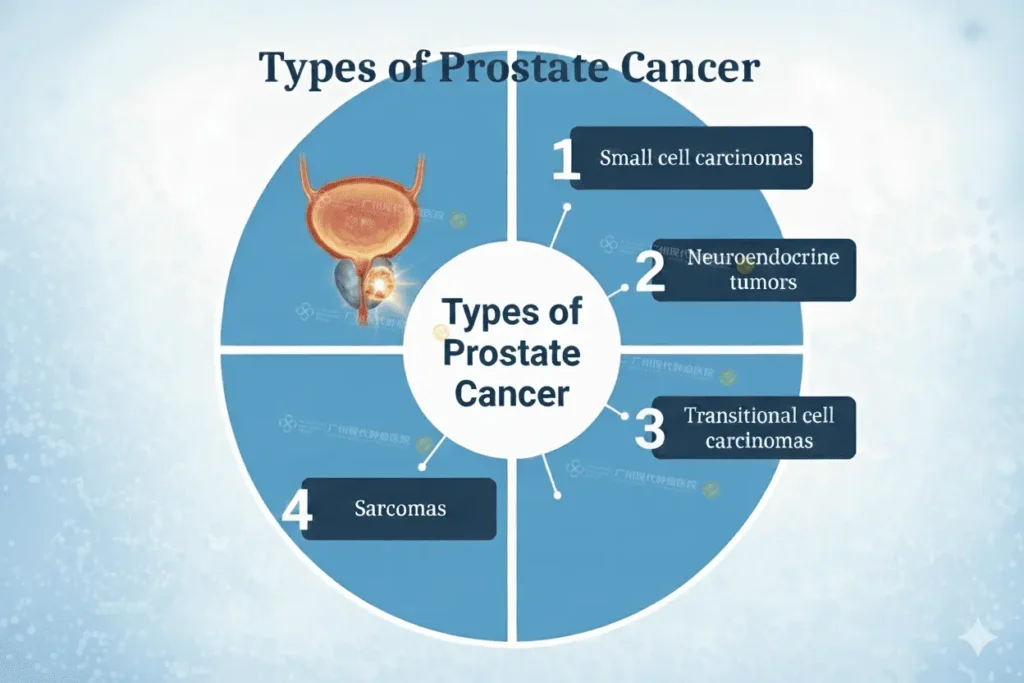
Several types of prostate cancer exist, including:
Adenocarcinoma
The most common type, developing from gland cells in the prostate.
Small Cell Carcinoma
A rare but aggressive form of prostate cancer.
Neuroendocrine Tumors
Cancer that develops from neuroendocrine cells within the prostate.
Transitional Cell Carcinoma
Cancer that may begin in the urinary system and spread to the prostate.
Stages of Prostate Cancer
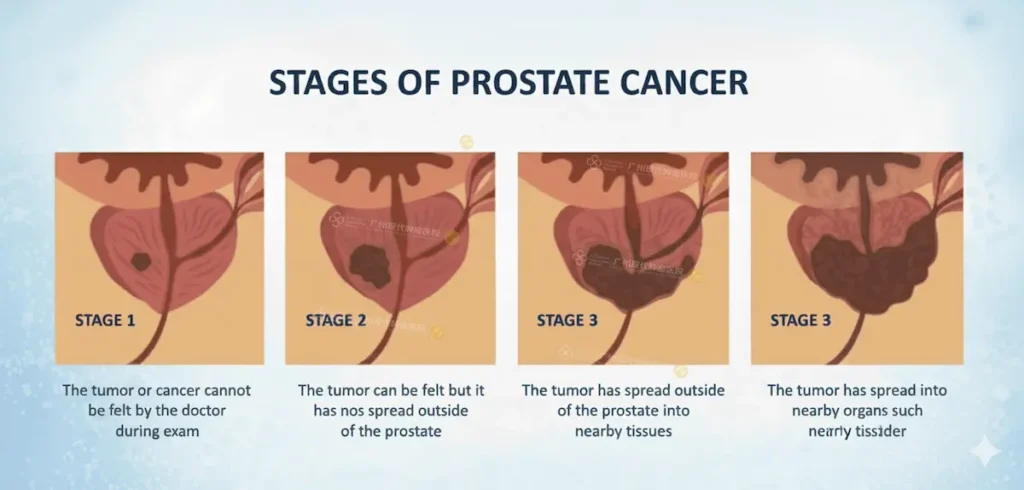
Prostate cancer is generally classified into four stages:
Stage I – Cancer is small and confined to the prostate.
Stage II – Cancer remains within the prostate but may be growing.
Stage III – Cancer has spread beyond the prostate to nearby tissues.
Stage IV – Cancer has spread to distant organs such as bones, lymph nodes, or other parts of the body.
Understanding the stage of cancer helps doctors determine the most suitable treatment approach.
How Prostate Cancer Is Diagnosed
Doctors may use several methods to diagnose prostate cancer:
- Prostate-Specific Antigen (PSA) blood test
- Digital Rectal Examination (DRE)
- MRI or CT scan
- Ultrasound examination
- Prostate biopsy
- PET-CT scan for advanced cases
Accurate diagnosis is important for developing an effective treatment plan.
Treatment Options for Prostate Cancer
Treatment depends on the stage of cancer, the patient’s overall health, and individual treatment goals.
At We Care Asia China, treatment recommendations are personalized for each patient.
Active Surveillance
For slow-growing cancers, doctors may monitor the condition closely without immediate treatment.
Surgery
Surgical removal of the prostate may be recommended for localized cancer.
Radiation Therapy
High-energy radiation is used to destroy cancer cells.
Hormone Therapy
Treatment that reduces male hormone levels to slow cancer growth.
Chemotherapy
Anti-cancer drugs are used to destroy cancer cells, especially in advanced stages.
Targeted Therapy
Specialized drugs target specific cancer-related abnormalities.
Immunotherapy
Treatment designed to help the immune system fight cancer cells.
Minimally Invasive Cancer Treatments
Some patients may benefit from minimally invasive therapies that aim to reduce pain, shorten recovery time, and improve quality of life.
Can Prostate Cancer Be Prevented?
Although prostate cancer cannot always be prevented, the following may help reduce risk:
- Maintain a healthy body weight
- Exercise regularly
- Eat a balanced diet rich in vegetables and fruits
- Avoid smoking
- Limit excessive alcohol consumption
- Undergo regular medical check-ups, especially after age 50
Early screening is particularly important for individuals with a family history of prostate cancer.
Living With Prostate Cancer
Many patients with prostate cancer continue to live active and fulfilling lives during and after treatment. Emotional support, healthy lifestyle habits, and ongoing medical monitoring play important roles in long-term care.
At We Care Asia China, we are committed to supporting patients through every stage of their cancer journey with compassionate care and advanced medical solutions.
When Should You See a Doctor?
You should consult a doctor if you experience:
- Persistent urinary problems
- Blood in urine or semen
- Ongoing pelvic or back pain
- Unexplained weight loss
- Difficulty urinating
Early diagnosis can improve treatment options and outcomes.
Prostate Cancer Care at We Care Asia China
We Care Asia China provides comprehensive support for international patients seeking cancer treatment in China. We help patients access advanced medical technologies, experienced oncology specialists, and personalized treatment programs tailored to their condition and needs.
Our goal is to help patients and families make informed decisions with confidence, comfort, and compassionate guidance throughout the treatment process.