

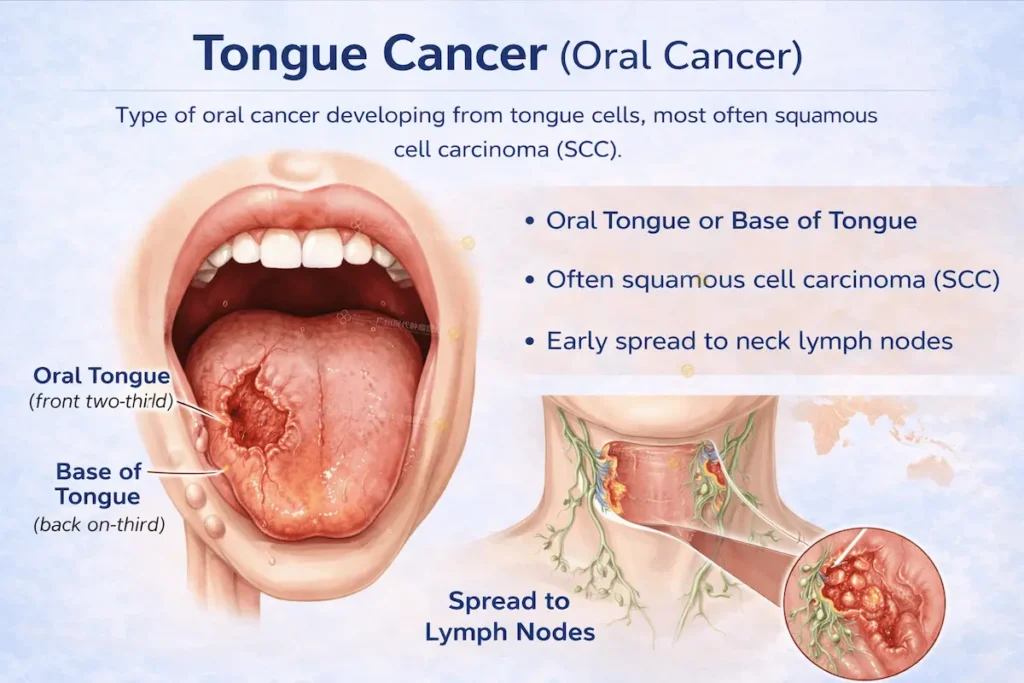
Tongue cancer is a type of oral cancer that develops in the tissues of the tongue. Most cases begin in the flat squamous cells that cover the surface of the tongue. The disease can occur in the front part of the tongue, which is easier to see, or at the base of the tongue near the throat, where it is often harder to detect in the early stages. Early diagnosis and proper treatment are important because tongue cancer can spread to nearby lymph nodes and other parts of the body if left untreated.
Types of Tongue Cancer
Tongue cancer is generally divided into two main categories:
- Oral Tongue Cancer
Develops in the front two-thirds of the tongue. This type is usually easier to notice because the affected area is visible. - Base of Tongue Cancer
Occurs in the back third of the tongue, which is part of the throat region (oropharynx). This type is often associated with HPV infection and may be diagnosed later because symptoms are less obvious.
The majority of tongue cancer cases are classified as Squamous Cell Carcinoma (SCC). Rare forms include lymphoma, melanoma, and adenocarcinoma.
Causes and Risk Factors
Several factors may increase the risk of developing tongue cancer, including:
- Smoking and tobacco use
- Heavy alcohol consumption
- Human papillomavirus (HPV) infection
- Betel nut or areca nut chewing
- Poor oral hygiene
- Chronic irritation from sharp teeth or dentures
- Weakened immune system
- Age over 40 years
- Family history of cancer
People who smoke and consume alcohol together have a significantly higher risk compared to those exposed to only one factor.
Common Symptoms
Symptoms of tongue cancer may appear gradually and are often mistaken for minor mouth problems in the early stages.
Early Symptoms
- Persistent mouth ulcer or sore that does not heal
- Red or white patches on the tongue
- Pain or burning sensation in the tongue
- A lump or thickened area on the tongue
- Difficulty chewing or swallowing
- Changes in speech or pronunciation
Advanced Symptoms
- Bleeding from the tongue
- Persistent ear pain
- Swelling in the neck due to enlarged lymph nodes
- Difficulty moving the tongue or jaw
- Loose teeth
- Unexplained weight loss
If these symptoms continue for more than two weeks, medical evaluation is strongly recommended.
Stages of Tongue Cancer
Tongue cancer is commonly staged based on tumor size, lymph node involvement, and whether the cancer has spread to other organs.
- Stage I: Small tumor without lymph node involvement
- Stage II: Larger tumor but still localized
- Stage III: Cancer has spread to nearby lymph nodes
- Stage IV: Advanced spread to nearby tissues or distant organs such as the lungs or liver
Understanding the stage helps doctors determine the most suitable treatment plan.
Diagnosis
Doctors may use several methods to confirm tongue cancer, including:
- Physical oral examination
- Biopsy to analyze suspicious tissue
- MRI or CT scan to evaluate tumor size and spread
- PET-CT scan to detect metastasis
- Ultrasound examination of neck lymph nodes
- HPV testing for tumors located at the base of the tongue
A biopsy remains the most accurate method for confirming the diagnosis.
Treatment Options
Treatment depends on the stage, location, and overall condition of the patient. At We Care Asia China, a personalized treatment approach may include one or a combination of therapies.
Surgery
Surgery is commonly performed to remove the tumor and affected lymph nodes. In some cases, reconstructive procedures may be needed to restore speech and swallowing functions.
Radiation Therapy
Radiotherapy uses high-energy radiation to destroy cancer cells and is often recommended for early-stage tongue cancer or after surgery.
Chemotherapy
Chemotherapy may be combined with radiation therapy or used for advanced-stage cancer to help control the spread of disease.
Minimally Invasive Cancer Treatments
We Care Asia China also provides advanced minimally invasive cancer therapies that may help reduce trauma and recovery time, including:
- Interventional Therapy
- Cryotherapy
- Nanoknife Therapy
- Radiofrequency Ablation
- Particle Implantation Therapy
- Combined Knife Technology
These treatments are selected based on the patient’s condition and clinical evaluation.
Can Tongue Cancer Be Prevented?
Although not all cases can be prevented, the following steps may help reduce the risk:
- Stop smoking and avoid tobacco products
- Limit alcohol consumption
- Maintain good oral hygiene
- Treat dental problems promptly
- Receive HPV vaccination when appropriate
- Schedule regular dental and oral health checkups
Early detection greatly improves the chances of successful treatment and recovery.