

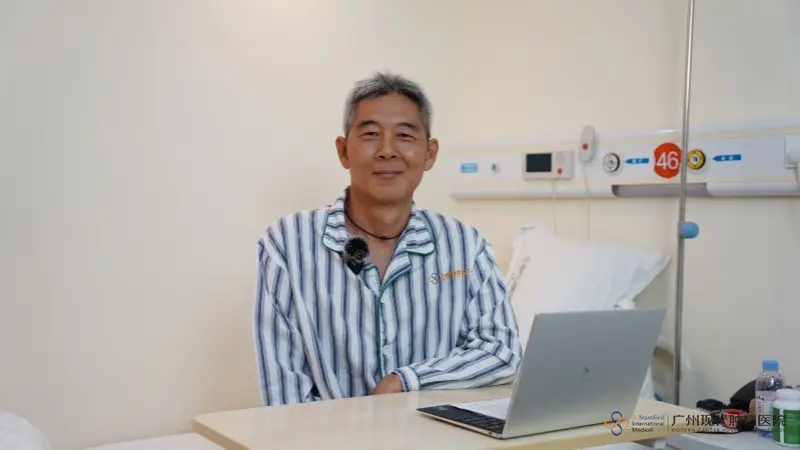
For years, I ignored the signs my body was sending. Frequent urination, then difficulty urinating, then sleepless nights spent running to the bathroom — I kept telling myself it was nothing serious. By July 2023, I finally went to a local hospital in Malaysia. The doctor said it was just an enlarged prostate. I took the medication, but nothing improved.
What followed was six months of uncertainty — biopsies in Malaysia, then in Singapore, back and forth between cities, waiting for answers that never came clearly. The results only pointed to high-grade urothelial cancer with possible bladder involvement. Both countries’ doctors agreed: surgery, radiotherapy, and a stoma. That meant living the rest of my life attached to a urine catheter bag.
I refused. I had watched my father suffer through radiotherapy — the headaches, the vomiting. That was not the life I wanted. I went home and kept searching.
My condition didn’t wait for me to find answers. The difficulty urinating became unbearable, and I had to undergo a cystostomy just to function. Wearing that bag every day was physically restricting and emotionally exhausting. I couldn’t exercise, I couldn’t move freely, and the wound care was both tedious and humiliating.
Then my wife and I attended a cancer treatment seminar held by St. Stamford Modern Cancer Hospital Guangzhou. That evening, I heard about minimally invasive interventional therapy — a treatment that could target the tumor directly without removing my organs. For the first time in months, I felt something I had almost forgotten: hope.
With the guidance of We Care Asia, I was connected to the right resources and found my way to the hospital by the end of 2023. After a thorough examination, I finally received a definitive diagnosis: Stage IV prostate cancer, with cancer cells invading the bladder. It was a hard truth to hear — but having a clear answer meant treatment could finally begin.
The MDT team designed a treatment plan centered on interventional therapy, delivering high-potency anti-tumor drugs directly into the tumor tissue. After my first session, urination improved noticeably. After the second and third, the tumor had shrunk significantly — and I was finally free of the catheter bag. I cried. My wife cried. It felt like getting my life back.
I later underwent seed implantation therapy to further control the tumor locally. By November 2025, the CT results confirmed that both the prostate tumor and lymph node lesions had been essentially fully inactivated.
There were dark days — moments where I felt completely lost and hopeless. But my wife never left my side, and we walked through every step of this journey together. I am deeply grateful to the medical team for their precision, their compassion, and the way they treated me not just as a patient, but as a person.
To anyone facing a similar diagnosis: traditional treatment is not your only option. Find what is right for you, and do not stop until you do.