

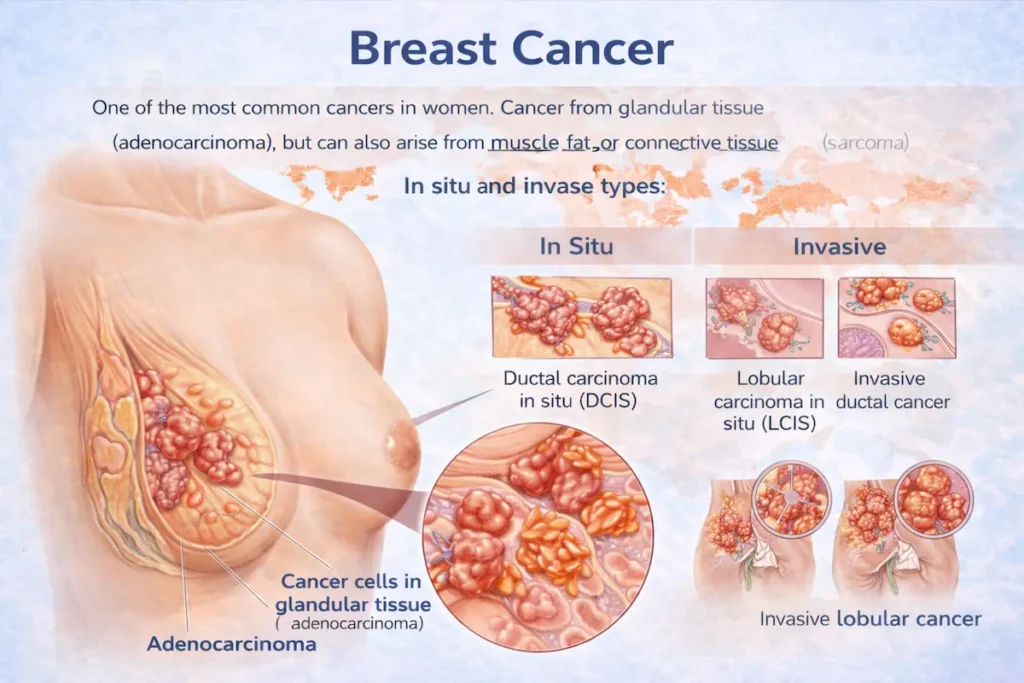
Breast cancer is one of the most common types of cancer affecting women worldwide. It develops when abnormal cells in the breast grow uncontrollably and form a tumor. In some cases, breast cancer can spread to nearby lymph nodes or other parts of the body if not treated early.
At We Care Asia China, we believe that understanding breast cancer is the first step toward early detection and better treatment outcomes.
What Is Breast Cancer?
Breast cancer usually begins in the milk ducts or lobules of the breast. Most breast cancers are classified as adenocarcinomas, meaning they originate from glandular tissue.
Breast cancer can be categorized into two main groups:
- Non-invasive breast cancer (in situ)
Cancer cells remain confined to the ducts or lobules and have not spread. - Invasive breast cancer
Cancer cells spread beyond the original area into surrounding breast tissue and potentially other organs.
Common Types of Breast Cancer
Ductal Carcinoma in Situ (DCIS)
A very early, non-invasive form of breast cancer found inside the milk ducts.
Invasive Ductal Carcinoma (IDC)
The most common type of breast cancer. It begins in the ducts and spreads into nearby breast tissue.
Invasive Lobular Carcinoma (ILC)
Starts in the milk-producing glands (lobules) and may spread gradually through breast tissue.
Other Less Common Types
- Inflammatory breast cancer
- Paget’s disease of the nipple
- Medullary carcinoma
- Mucinous carcinoma
- Tubular carcinoma
Breast Cancer Subtypes
Doctors may classify breast cancer based on hormone receptors and protein markers. These subtypes help determine the most suitable treatment approach.
Hormone Receptor Positive (ER/PR Positive)
Cancer cells grow in response to hormones such as estrogen or progesterone.
HER2-Positive Breast Cancer
Cancer cells produce excess HER2 protein, which may cause faster tumor growth.
Triple-Negative Breast Cancer (TNBC)
A more aggressive subtype that does not have estrogen, progesterone, or HER2 receptors.
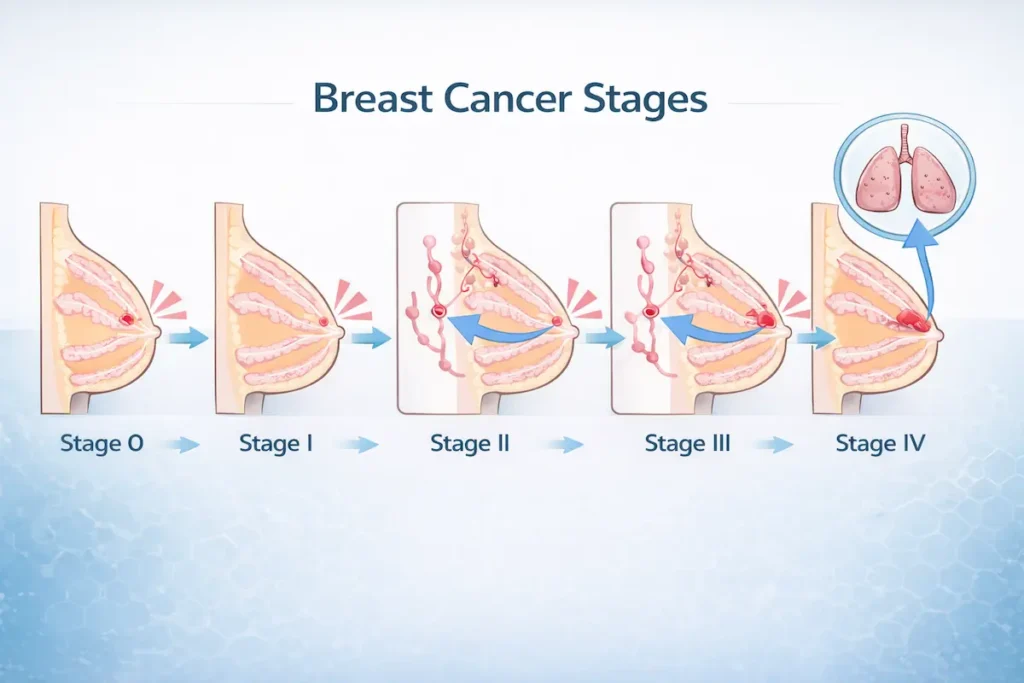
Breast Cancer Stages
Breast cancer staging helps doctors understand how advanced the disease is and plan appropriate treatment.
Stage 0: Cancer remains inside the ducts and has not invaded nearby tissue.
Stage I: Small tumor with little or no spread to lymph nodes.
Stage II: Larger tumor and/or limited spread to nearby lymph nodes.
Stage III: Locally advanced cancer with more extensive lymph node involvement.
Stage IV: Cancer has spread to distant organs such as the lungs, liver, bones, or brain.
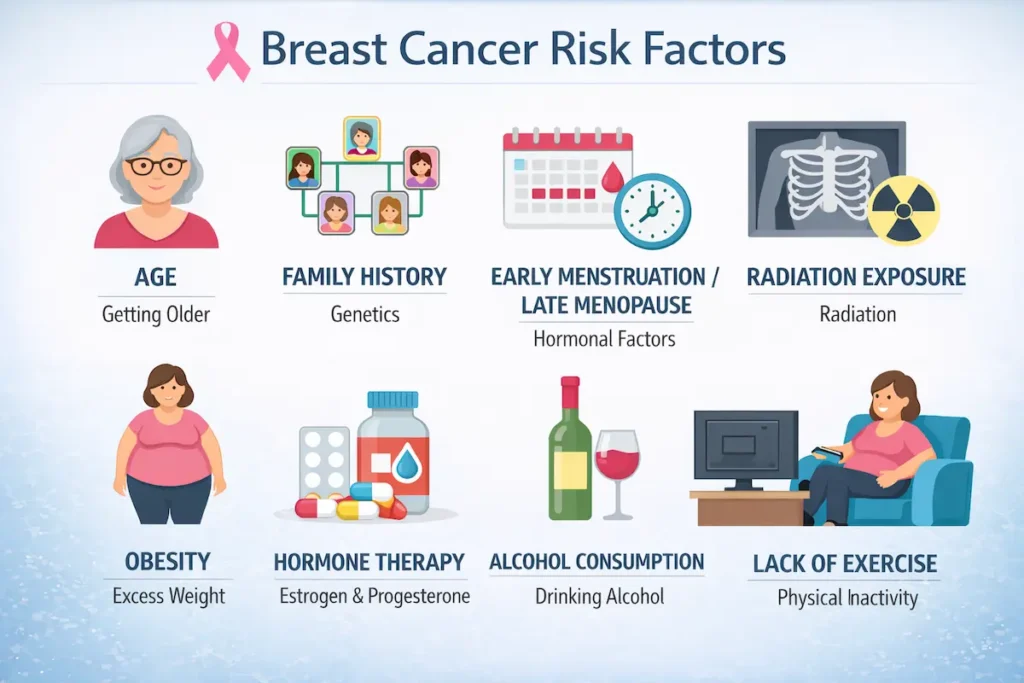
Risk Factors for Breast Cancer
Some factors may increase the likelihood of developing breast cancer.
Non-Modifiable Risk Factors
- Female gender
- Increasing age
- Family history of breast or ovarian cancer
- Genetic mutations such as BRCA1 or BRCA2
- Early menstruation or late menopause
Lifestyle-Related Risk Factors
- Obesity
- Lack of physical activity
- Excessive alcohol consumption
- Long-term hormone replacement therapy
- Late pregnancy or no pregnancy history
Common Symptoms of Breast Cancer
Early-stage breast cancer may not cause obvious symptoms. Common warning signs include:
- A painless lump in the breast or underarm
- Changes in breast size or shape
- Skin dimpling or thickening
- Nipple inversion
- Bloody or unusual nipple discharge
- Redness or scaling around the nipple
- Swelling of lymph nodes near the armpit or collarbone
If you notice any unusual breast changes, it is important to seek medical evaluation promptly.
How Breast Cancer Is Diagnosed
Breast cancer diagnosis usually involves several examinations and tests.
Clinical Examination
- Breast self-examination
- Physical examination by a doctor
Imaging Tests
- Mammography
- Breast ultrasound
- Breast MRI for selected patients
Biopsy Procedures
A biopsy is the most accurate way to confirm breast cancer. Common biopsy methods include:
- Core needle biopsy
- Fine needle aspiration
- Surgical biopsy
Additional Laboratory Tests
- Hormone receptor testing (ER/PR)
- HER2 testing
- Genetic testing for selected patients
Importance of Early Detection
Early detection significantly improves treatment success and survival rates. Many breast cancers can be treated more effectively when diagnosed in the early stages before spreading to other organs.
Regular screening and awareness of breast changes are essential, even if no symptoms are present.
Frequently Asked Questions
Can breast cancer be prevented?
Breast cancer cannot always be prevented, but maintaining a healthy lifestyle and attending regular screenings may help reduce the risk.
Is every breast lump cancerous?
No. Many breast lumps are benign (non-cancerous), but any persistent or unusual lump should be examined by a doctor.
Can breast cancer recur after treatment?
Yes. Breast cancer may return even after successful treatment, which is why long-term follow-up care is important.
Is breast cancer only found in women?
Although breast cancer is far more common in women, men can also develop breast cancer.
Why is screening important if there are no symptoms?
Many early-stage breast cancers do not cause symptoms. Screening helps detect cancer before it becomes advanced.
Personalized Cancer Care at We Care Asia China
At We Care Asia China, we support patients by connecting them with experienced oncology specialists and comprehensive cancer care services. Every patient’s condition is unique, which is why treatment plans should be personalized based on cancer type, stage, overall health condition, and treatment goals.
If you or your loved one would like more information about breast cancer diagnosis or treatment options, our team is ready to assist you with professional guidance and compassionate support.